
1 views
In many villages in West Kalimantan, Central Kalimantan, Riau, and other regions, the presence of oil palm plantation companies often comes with a friendly face full of hope.
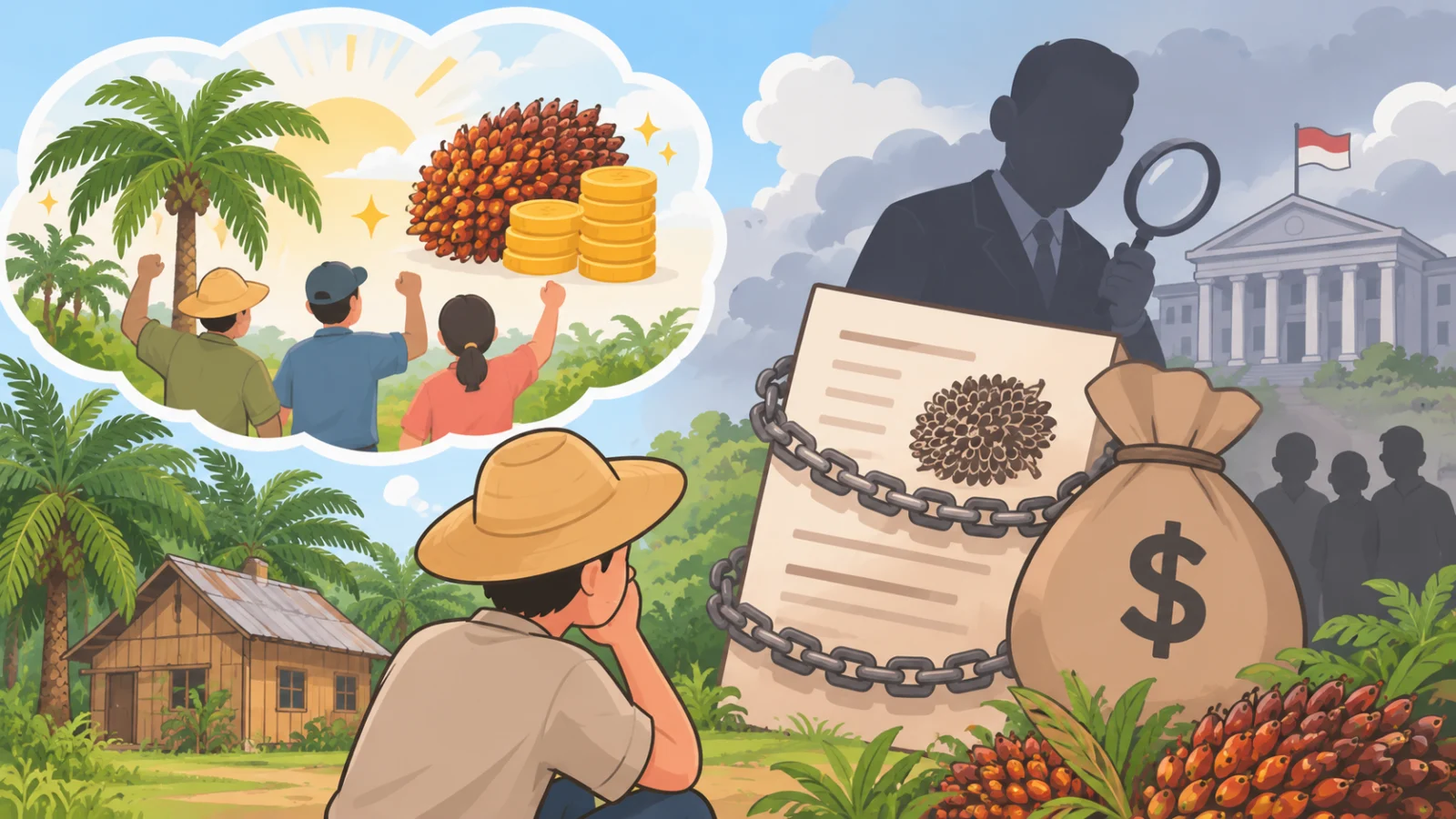
Through government-facilitated socialization, communities are introduced to a dream: children can go to school to higher levels, houses can be renovated, food and health needs are met, and families can live decently and happily.
The company is present not only as a business actor, but is portrayed as a village “savior” that will open isolation, build roads, provide employment, and elevate the standard of living of the community.
That promise is not mere rhetoric. It is delivered at a time when communities are facing limitations: inadequate roads, distant market access, unstable agricultural income, and the government itself admitting limited development funds.
In such situations, the company’s offer feels like a way out. Communities are asked to surrender the land they control and cultivate, and are then given the hope that the plasma plantations will belong to them, be managed by the company, and generate routine income. Sharing schemes such as 80:20 or 70:30 are even cited as proof that the community will obtain a large portion of the garden’s yield.
However, the history of nucleus-plasma partnerships in Indonesia shows a much more bitter pattern. Sweet promises during socialization often turn into plantation development debts, unclear profit-sharing, loss of control over land, and long-term dependence on companies. When communities finally realize that the dream has not materialized and try to fight for their rights, they are often not faced with a fair mediation table, but rather with legal traps and criminalization processes.
Download the complete article via the following link >> This Link <<