
0 views
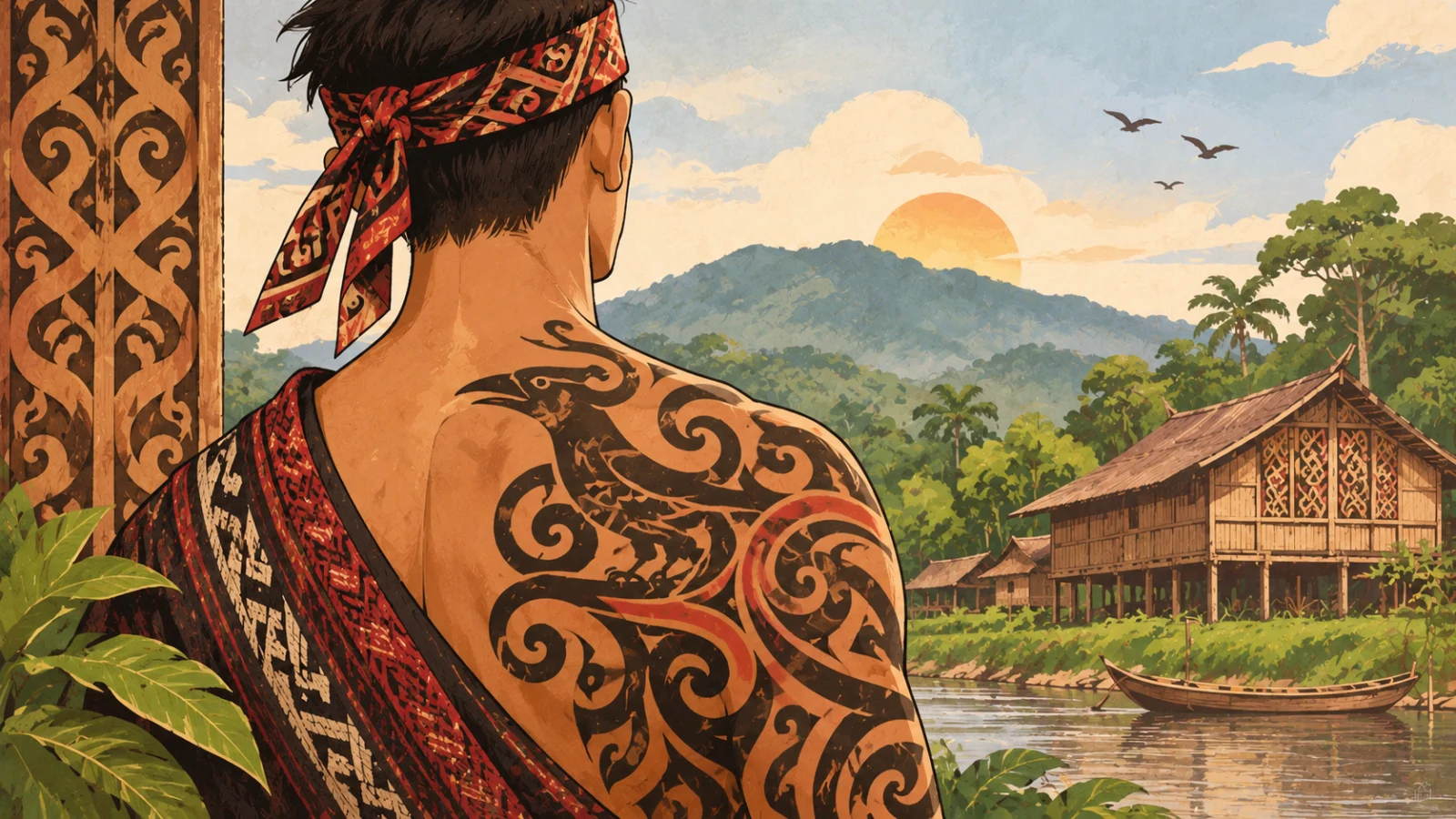
On human skin, there are stories that are not always visible to the eye. There are fine lines, plant motifs, animal shapes, and seemingly simple marks that hold knowledge about who we are, where we come from, and how we ought to live alongside nature.
For some Indigenous peoples in the Archipelago and around the world, tattoos are not mere body ornaments. They are a language. They are memories. They are a map of life inscribed not on paper, but on the body—the most personal yet most real place where humans live out their lives.
The Body as a Cultural Manuscript
Among the Mentawai Indigenous peoples, tattoos are known as titi. They are not arbitrarily created images, but a visual sign system containing a person's origin, skill, social status, up to group territorial boundaries. The motifs serve as a tool of communication among members of Indigenous peoples, like a "handbook" containing teachings of truth, virtue, and emotional education.
Mentawai tattoos are also closely linked to the Sabulungan belief, the view that nature possesses power and spirit. Humans do not stand above nature, but live in the midst of nature: together with forests, rivers, animals, plants, and ancestors. Because of this, tattoo motifs serve as reminders to maintain balance so that humans do not forget that they are part of the Earth, not its sole ruler.
In this view, tattoos are "eternal clothing". They are carried until the end of life and believed to be a light on the journey after death.
A Mark of Adulthood and Honor
Traditional tattoos often cannot be made carelessly. They can mark adulthood, courage, skill, as well as a person's position in the community. Among the Mentawai people, tattoos can indicate someone's profession or role, such as a hunter, healer, or holder of a specific customary role. Among the Dayak people, tattoos or pantang also hold sacred meaning. They relate to identity, protection, social status, and spiritual connections with nature and ancestral spirits. Tattoos serve as a sign that a person is not merely a standalone individual, but a member of a larger community, history, and belief system.
Thus, wearing customary tattoos means carrying responsibility. The body becomes a space where life values are remembered: respecting nature, taking care of others, fulfilling social roles, and living in harmony with ancestral beliefs.
When Meaning Is Swapped for Stigma
Unfortunately, over time, the meaning of tattoos has often been severed from its roots. Tattoos that were once born from rituals, local wisdom, and respect for nature are now often seen merely as an urban lifestyle trend. Even more sadly, they are frequently associated with a negative image: a sign of criminality, gang identity, or a symbol of delinquency.
Yet, there is no fair logic in judging someone solely because of ink on their skin. Tattoos do not cause a person to be evil, just as neat clothing does not automatically make someone virtuous. Judging human character must stem from their actions, not from the motifs drawn on their body.
It is this poverty of understanding that we need to criticize. When the broader public does not understand the cultural context of tattoos, they are easily reduced to a negative symbol. As a result, custodians of the tradition may feel ashamed, afraid, or driven to abandon their ancestral heritage.
Youth Who Choose to Return Home
This is where the story of Dayak Simpakng youth becomes important. Phenomenological research by Christian Siergi M. and Kharisma Nasionalita found that Dayak Simpakng youth view tattoos as a tradition and culture of the Dayak Indigenous peoples that must be preserved.
They realized that tattoos were once abandoned due to emerging stigma: people with tattoos were viewed negatively and even struggled to be accepted in the workforce. However, it was precisely the awareness of losing this heritage that moved them to return to safeguarding the culture.
For them, tattoos are not a symbol of crime. Tattoos are heritage. Tattoos are identity. Tattoos are a way to say to the world: "I am of Dayak descent, and I will not let my ancestral culture vanish simply because it is misunderstood." The study also showed that the self-concept of these youth was formed by significant others—important people in their lives, such as family or respected figures—and reference groups, namely social and cultural groups that serve as references for their identity.
Preserving Meaning, Not Mimicking Form
Admiration for traditional customary tattoos does not mean anyone can simply appropriate their motifs. Customary motifs are not merely beautiful designs; they are born from history, rituals, community rights, and specific spiritual values. Respecting tattoos also means respecting the people who safeguard them.
Therefore, we need to distinguish between traditional customary tattoos and contemporary tattoos. Both can be body art, but they do not always carry the same meaning and rights. Customary tattoos require understanding, permission, and sensitivity toward their cultural context.
In the end, tattoos teach one simple yet profound thing: the human body can be a repository of memory, not just a site of display. If tattoos are understood wisely, they can remind us to live more humbly, closer to nature, more appreciative of others, and more faithful to our cultural roots.
References
- Risma Dona, “Tradisi Doro: Uniknya Tato Mentawai,” Balai Pelestarian Nilai Budaya Sumatera Barat, Kementerian Pendidikan dan Kebudayaan.kebudayaan.kemdikbud.go
- Christian Siergi M. dan Kharisma Nasionalita, “Konsep Diri Pemuda Bertato Suku Dayak Simpakng: Studi Fenomenologi Pemuda Keturunan Suku Dayak Simpakng Pelaku Budaya Tato Tradisional Suku Dayak,” Telkom University Open Library Publications, 2020.
- “Tradisi Tato sebagai Simbol Status Sosial pada Suku Dayak Ngaju Kalimantan Tengah,” Borobudur Communication Review, Universitas Tidar.
- “Tato yang Tak Mengenal Batas dan Usia,” Kompas.id, 2018.
- “Suku Mentawai dan Dayak, Mendunia Lewat Tato,” Detik Travel, 2014.