
0 views
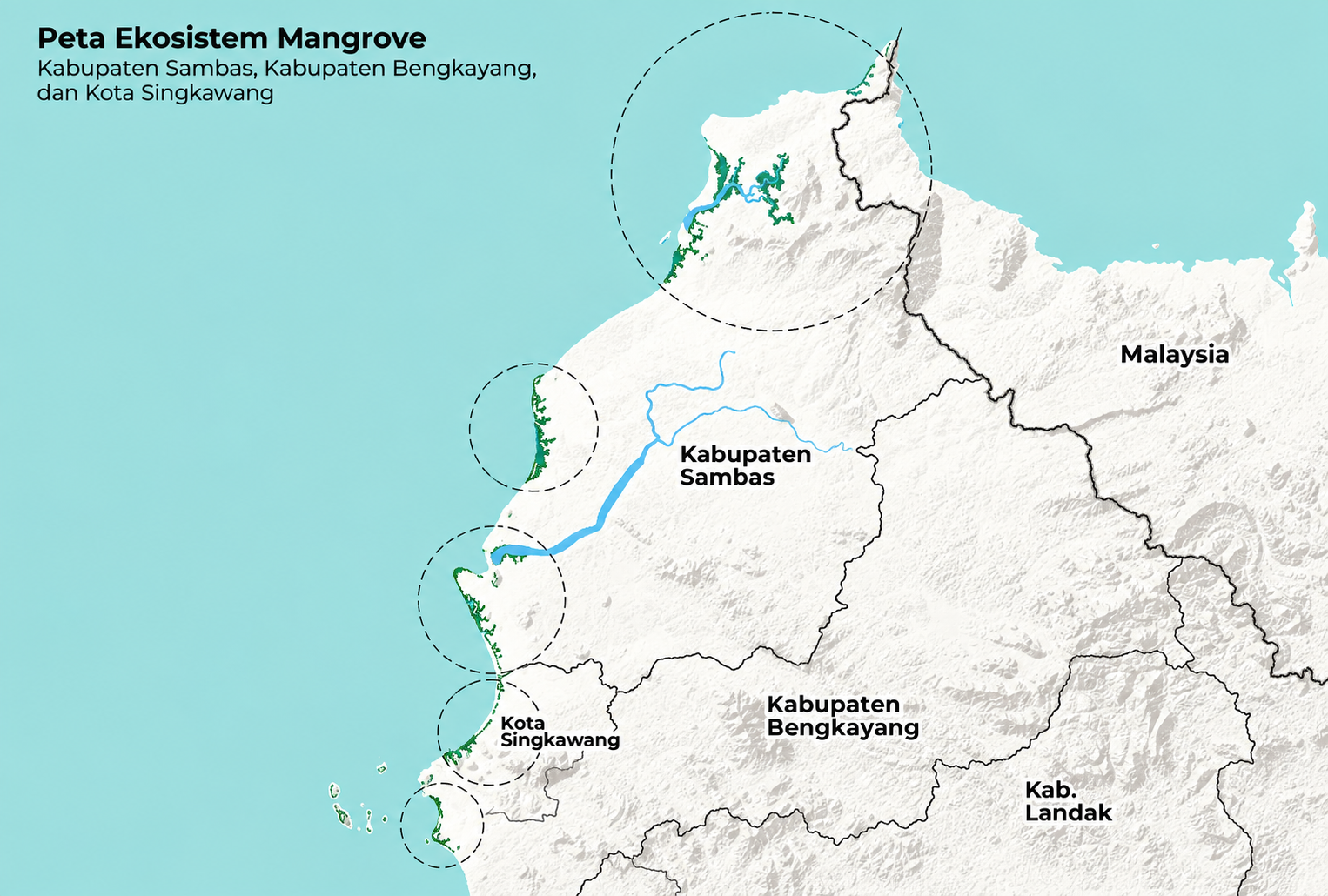
Mangrove ecosystems are among the most important natural defences for coastal areas. In West Kalimantan, mangrove forests not only protect shorelines from erosion: they also store significant amounts of blue carbon, provide habitat for biodiversity and sustain coastal livelihoods. According to the 2025 National Mangrove Map, mangrove ecosystems in West Kalimantan cover approximately 163,209 hectares, representing around 4.72% of Indonesia’s total mangrove area. They extend across seven regencies and cities, with the largest concentration in Kubu Raya Regency, at around 68%. Bengkayang, Singkawang and Sambas—the focus of this study—have differing characteristics, areas of coverage and challenges.
In terms of biodiversity, West Kalimantan has 40 mangrove species, including two globally rare species, Bruguiera hainesii and Kandelia candel. Bruguiera hainesii is listed as Critically Endangered on the IUCN Red List, meaning that it faces an extremely high risk of extinction.
This article offers an accessible analysis of mangrove landscapes in these three areas, examining their ecology, spatial distribution, carbon potential, threats of degradation and conservation efforts. It uses a scientific approach to unpack the complex dynamics at work in each area.
Download the full article: Read the article