
0 views
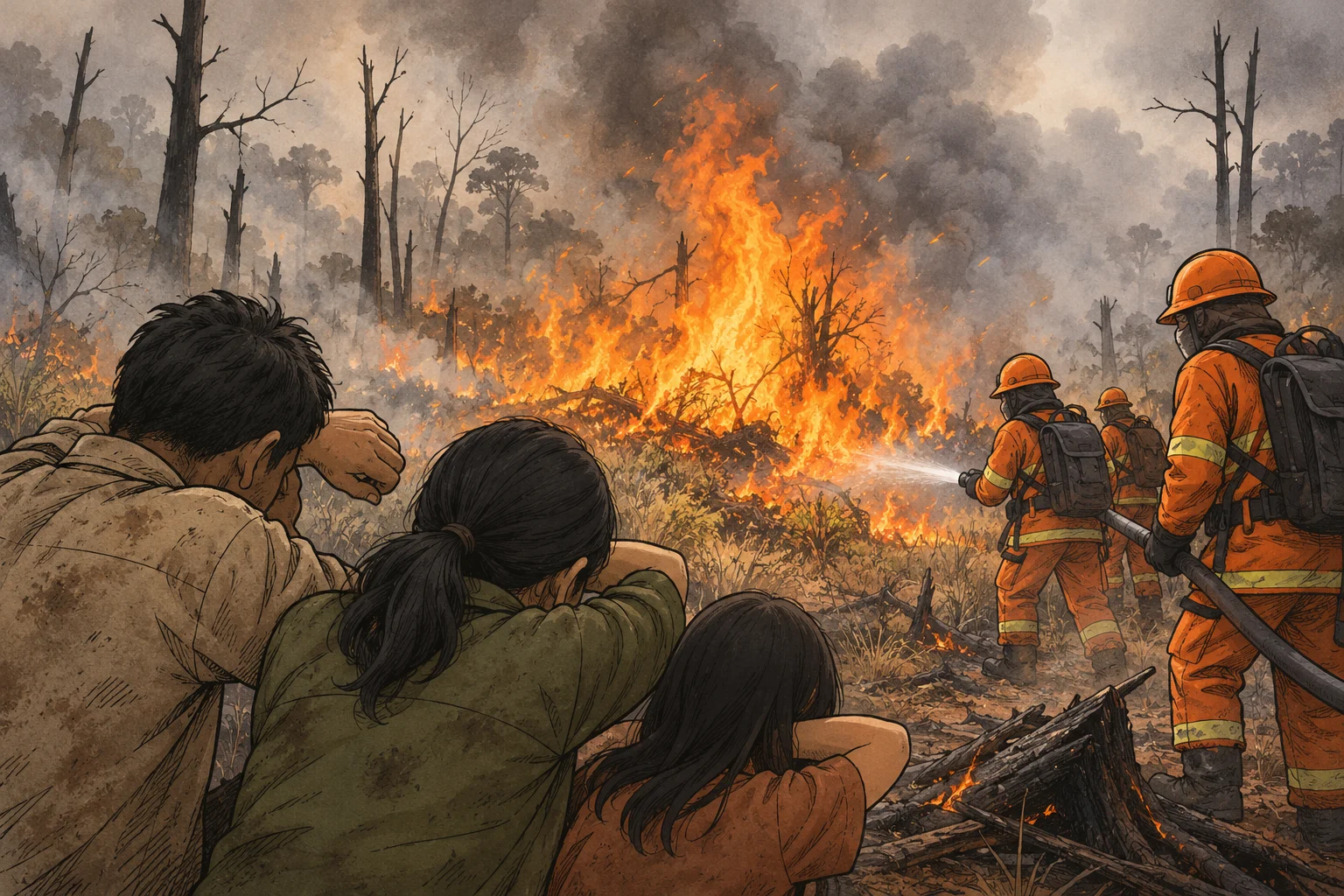
They are not soldiers. They carry no weapons. Yet they have fallen on a battlefield they did not create: forest and land fires that recur every year. Meanwhile, the smoke suffocates millions of chests, from infants at integrated health posts to field workers who have no choice but to work in toxic air.
The 2026 forest and land fires reveal a truth that must not be wrapped in technical language: these fires are not merely natural disasters, but the fruit of land governance, capital, licensing, and authorities that have failed to protect the people. When volunteers fall, millions of residents fall ill, companies are investigated, and emergency disaster funds are alleged to have been corrupted, the state must not stop at expressions of grief.
Latest Data: Fires Are Still Burning
As of November 3, 2026, BNPB recorded that 742 hectares of land are still burning and under handling. Central Kalimantan became the region with the largest burned area, reaching 351 hectares, a 42 percent decrease compared to the previous day. South Papua recorded 253 hectares, a 56 percent decrease.
Cumulatively until Monday, November 2, the total land still under handling reached 3,392 hectares in Kalimantan and 990 hectares in Sumatra. Previously, BNPB also recorded widespread fires in Papua: as of October 29, the burned area in Papua reached 2,393 hectares, detailed as Southwest Papua at 2,131.4 hectares, Central Papua at 100.2 hectares, and South Papua at 161.5 hectares.
These figures show that even though some hotspot locations have been extinguished, the crisis is not over. Peatlands and degraded ecosystems remain a ticking time bomb: one long dry season is enough to make the fire spread again.
Fires on the land may be extinguished by rain, water, or the sweat of volunteers. But the wounds they leave behind will not soon disappear: the lungs of children exposed to smoke, damaged peatlands, lost harvests, and families who have lost loved ones. Forest and land fires are not merely seasonal disasters; they are recurring wounds born from failed policies, delayed law enforcement, and interests that have been protected for too long.
Download the full article via the following link >> This Link <<