
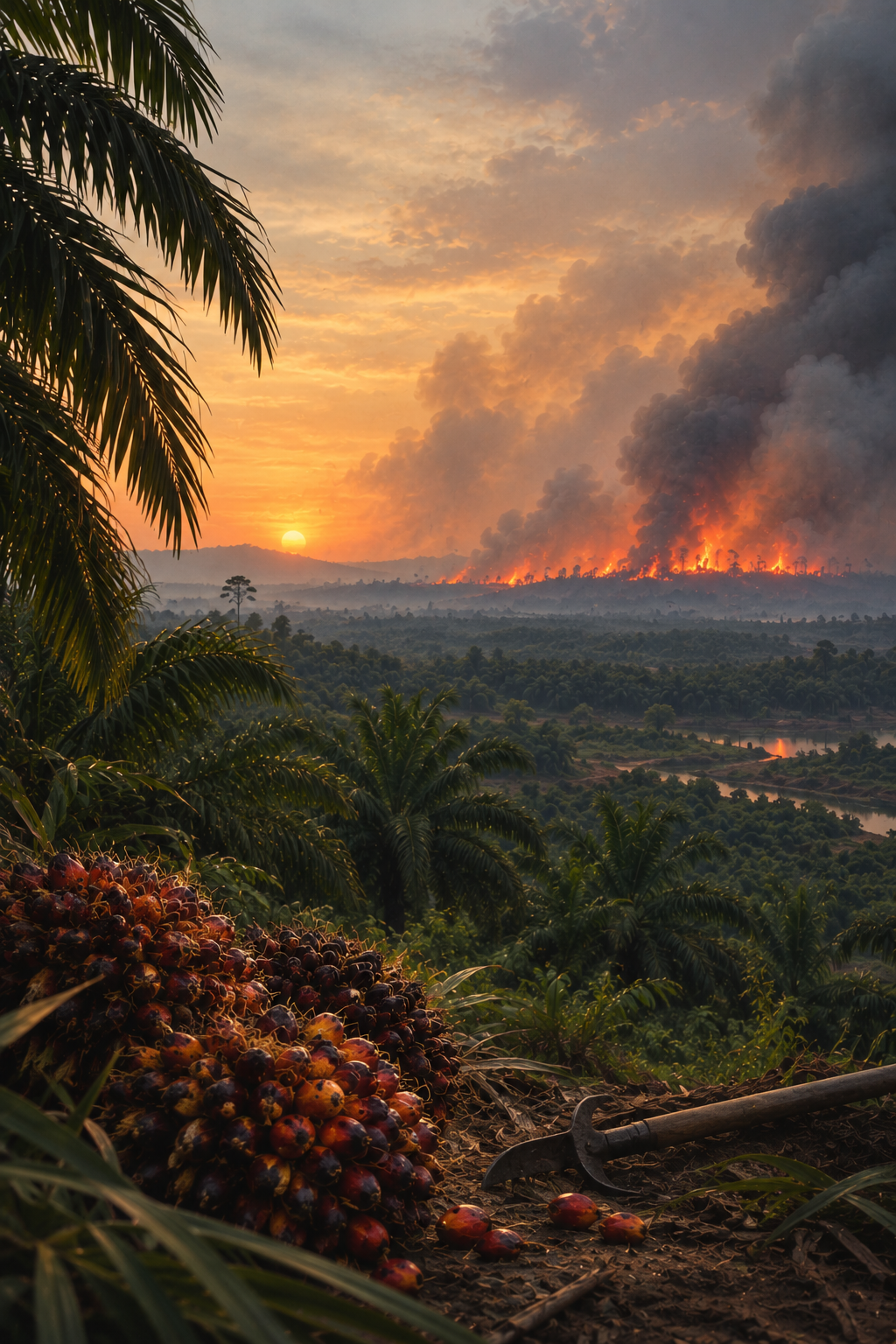
Something is profoundly wrong whenever smoke blankets West Kalimantan. The sky turns grey, eyes sting, breathing becomes difficult and visibility falls. Schools close, flights are disrupted and people are told to limit outdoor activities. The government talks about air quality, hotspots, firefighting and disaster response. The media show maps of the fires. People close their doors and windows.
Yet behind all this are people whose bodies cannot stop working. Oil palm fruit still has to be harvested, fresh fruit bunches collected and plantation roads travelled. Trucks keep carrying the produce, mills still need raw materials and heavy machinery keeps moving. Plantation and mining workers remain at their workplaces, breathing air already declared hazardous.
For the West Kalimantan Federation of Oil Palm Plantation Workers’ Unions (FSBKS-KB), this is precisely why forest and land fires must be understood differently. They are not simply an environmental issue. They are also a matter of labour rights, occupational safety and health, industrial relations, the distribution of risk and unequal power within production chains.
The smoke may fill everyone’s air, but the risks of polluted air are never shared fairly. Some people can shut their windows, work indoors, travel in air-conditioned vehicles, take leave or leave the affected area. For workers who depend on wages, however, stopping work is not always a straightforward choice. Not working means losing income.
And lost income means their families can no longer meet their daily needs. The instruction to keep working therefore carries far greater force. Workers’ bodies are caught between the need to survive and the obligation to work. This is where forest and land fires intersect with labour law and political economy.
Download the full article: Read the article